

Merchant accounts are the lifeblood of digital commerce. But what happens when your applications keep getting declined? For many entrepreneurs, it’s a frustrating puzzle. If you’re wondering why your merchant account is getting declined, you’re not alone—and this guide is here to help you figure it out and fix it.
Understanding the Basics of Merchant Accounts
What is a Merchant Account?
A merchant account is a specialized bank account that enables your business to process payments made with credit and debit cards. It acts as an intermediary between your business and the payment processor.
How Merchant Accounts Support Online Payments
Once a customer makes a purchase, the transaction is authorized and funds are deposited into your merchant account before moving into your business account. Without one, eCommerce and even physical card payments wouldn’t function.
Common Symptoms of a Declined Merchant Account
- Transactions Failing Unexpectedly: A sure sign something is wrong.
- Notification from Payment Processor: Emails or dashboard alerts saying your application is denied.
- Delays in Settlements: Even if approved, money isn’t showing up on time.
Understanding these symptoms helps you act before it becomes a bigger issue.
Reason #1: Poor or Incomplete Business Documentation
Importance of Accurate Business Info
Incomplete applications are one of the top reasons accounts get denied. Lenders and processors want to know who they’re working with. Mismatched business addresses, outdated licenses, or unclear service descriptions are all red flags.
Common Documentation Mistakes
- Using a home address in place of a commercial business address
- Not submitting ID or bank verification
- Leaving sections of your application blank
Fix It: Double-check every field, use professional documents, and have clear descriptions of your products or services.
Reason #2: High-Risk Industry Classification
What Defines a High-Risk Business
Some industries carry higher risks due to refund rates, legal restrictions, or fraud potential. If you fall into one, traditional processors might steer clear.
Examples of High-Risk Industries
- Adult entertainment
- CBD and supplements
- Travel agencies
- Online gambling
How to Navigate Risk Labels
Use a high-risk merchant service provider or work with an agent who can help you present your business in the best light.
Reason #3: Low Credit Score or Financial Instability
Why Credit Score Matters to Processors
Payment processors typically review both your personal and business credit scores, and a low score may indicate a greater risk of default.
Business vs. Personal Credit
Your personal credit will be reviewed, even if your business is just starting out. If you’ve had bankruptcies, collections, or defaults, it can hurt your chances.
Ways to Improve Your Credit Standing
- Pay down existing debts
- Resolve any outstanding collections
- Request credit limit increases to improve credit utilization
Reason #4: High Chargeback Ratio
What Is a Chargeback?
A chargeback happens when a customer challenges a transaction by contacting their bank. Too many, and you’re labeled as a financial risk.
How Chargebacks Affect Approval
High chargeback rates are seen by banks and processors as signs of potential fraud or subpar customer service.
Tools to Minimize Chargebacks
- Transparent return policies
- Responsive customer support
- Clear billing descriptors
Reason #5: Inconsistent or Suspicious Transaction Patterns
Red Flags That Trigger Declines
- Sudden spikes in sales volume
- Multiple high-ticket transactions in a short time
- Frequent refunds
How to Avoid Unusual Transaction Behavior
Keep transaction sizes consistent, monitor unusual activity, and alert your processor if you expect a temporary surge in sales.
How to Fix a Declined Merchant Account

- Contacting Your Processor: Request detailed explanations for the rejection.
- Submitting Proper Documentation: Update and resend accurate paperwork.
- Working With a Payment Consultant: Get professional help to repackage your application.
Choosing the Right Merchant Account Provider
Top Qualities to Look For
- Experience with your industry
- Transparent pricing
- Strong fraud protection tools
Questions to Ask Before Signing Up
- Are there early termination fees?
- What’s your chargeback policy?
- Do you serve high-risk businesses?
How to Stay Off the Decline List in the Future
- Keep your documentation up to date
- Monitor your chargeback ratio monthly
- Stay transparent about your business operations
Tools and Resources to Keep Your Merchant Account Healthy
- Chargeback management tools like Chargeback Gurus
- Credit monitoring services (e.g., Nav, Credit Karma for Business)
- CRM systems for better transaction tracking
What to Do if You’re Permanently Declined

Exploring Alternative Payment Methods
- Use third-party payment aggregators like PayPal, Stripe, or Square
- Consider crypto payment gateways
Offshore and High-Risk Account Options
These can offer flexible terms but come with higher fees and scrutiny.
If you’re tired of dealing with rejections and vague answers, let Stesanor guide you through the merchant account approval process—with real support, proven strategies, and access to high-risk-friendly providers.
Merchant Account Success Stories
“After being denied by three processors, we worked with a high-risk specialist who helped us organize our documentation. Now our transactions are smoother than ever.” — Jason, CBD Business Owner
Many businesses have faced the frustration of being denied a merchant account but have ultimately succeeded in securing approval by taking key steps and seeking expert help. Here are some real-world examples and strategies that have led to success:
- Overcoming High-Risk Industry Denial
A business in a high-risk sector, such as travel or hospitality, was initially denied a merchant account due to the industry’s reputation for chargebacks. By seeking out a provider specializing in high-risk accounts, such as Align eCommerce, the business was able to find a partner with the tools and expertise to handle their unique needs. The provider worked closely with the business, reviewed the reasons for denial, and helped present a stronger application, ultimately resulting in approval.
- Addressing Credit Score Issues
An entrepreneur with a poor personal credit score faced rejection from several mainstream processors. Upon learning that creditworthiness was the main obstacle, the business owner took two key steps:
Added a business partner with a higher credit score as a co-signer.
Provided additional documentation and a personal guarantee to the acquiring bank.
This approach reassured the underwriters and led to a successful application with a new processor.
- Fixing Application Errors and Resubmitting
Some businesses have had their applications denied due to simple mistakes or missing information. By directly contacting the merchant service provider, these businesses were able to resolve data entry errors or supply missing documents. In several cases, the provider helped troubleshoot the application, leading to a quick approval upon resubmission.
- Getting Off the MATCH List
A merchant discovered their denial was due to being on the MATCH (Terminated Merchant File) list, often for unresolved issues with a previous account. By contacting the acquiring bank that placed them on the list, settling outstanding bills, and providing evidence of resolution, the business was able to clear their record. After this, they successfully reapplied and were approved for a new merchant account.
- Modifying Business Model for Approval
Another business was denied due to being classified as high-risk based on its billing procedures and website content. With expert advice, the owner made small but meaningful changes-like updating website language and clarifying refund policies. These tweaks reduced perceived risk and led to approval with a different provider.
- Leveraging Expert Help
Many businesses have found success by seeking help from merchant account specialists. These experts reviewed denied applications, identified weak points, and matched businesses with banks more likely to approve their industry or situation. In several cases, the specialists’ relationships with multiple banks and knowledge of high-risk underwriting requirements were crucial to securing approval after initial denial.
“Don’t be afraid to ask for help! …Getting you set up with a merchant account IS our business. We work with every bank in North America (and many offshore) that handle ‘high risk’ business models. Those resources alone will ensure you’re taken care of.”
These stories highlight that a denial is rarely the end-many businesses have turned things around with the right adjustments and support.
Read Also: The Truth About High-Risk Merchant Accounts: What You Need to Know
Expert Tips to Keep Your Account in Good Standing

- Always respond promptly to processor inquiries
- Keep a monthly reconciliation log
- Avoid switching providers too often—it raises red flags
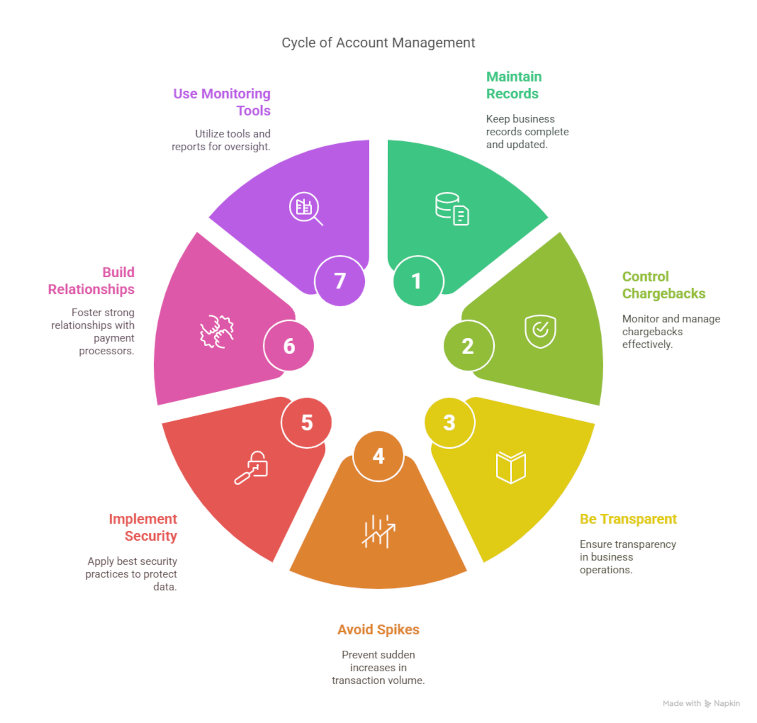
Keeping your merchant account in good standing isn’t just about getting approved—it’s about maintaining trust with your payment processor and ensuring long-term stability for your business. Here are some expert-backed strategies to help you stay off the decline list for good:
1. Maintain Complete and Updated Business Records
Payment processors regularly assess your risk level. Keeping your legal documents, licenses, bank statements, and business information current reduces scrutiny. Regularly update the following:
- Business address and contact details
- Banking and tax information
- Product or service listings
Expert Insight: “One of the easiest ways to lose favor with a processor is to let your info go stale. Treat every year like it’s a fresh application.” — Ava Brooks, Risk Analyst at PayJunction
2. Monitor and Control Chargebacks
Chargebacks are a key metric used to gauge a business’s reliability. Even a small spike can trigger account reviews.
Prevention Tips:
- Offer easy-to-understand billing descriptors
- Implement real-time fraud filters
- Provide responsive customer support to resolve disputes before they escalate
Expert Insight: “Keeping chargebacks below 1% should be your golden rule. Anything more and you risk being labeled as a high-risk merchant.” — James Carlton, Merchant Compliance Officer
3. Be Transparent About Your Business Model
Processors don’t like surprises. Sudden changes in your product lineup, pricing, or sales tactics can be flagged as suspicious. Keep your processor in the loop about:
- New product launches
- Seasonal sales surges
- Expansions into new markets
Expert Insight: “If you’re planning a big promo or new product, notify your processor. Transparency builds trust and reduces your risk profile.” — Lindsay Zhao, Fintech Consultant
4. Avoid Sudden Spikes in Transaction Volume
Sudden increases in transaction amounts or frequency can indicate potential fraud or inadequate planning. Instead of processing a flood of transactions without warning:
- Inform your processor in advance
- Gradually scale your transaction volume
- Use analytics to predict and explain volume changes
Expert Insight: “Most flags aren’t about the size of the transaction—they’re about the surprise. A heads-up goes a long way.” — Omar Reyes, VP of Risk Management, PayGate
5. Implement Security Best Practices
PCI compliance isn’t optional—it’s critical. Secure your payment environment using:
- Tokenization and encryption
- Two-factor authentication
- Regular penetration testing and audits
Expert Insight: “Fraud prevention is your frontline defense. The stronger your security, the safer your account—and your customers—will be.” — Megan Doyle, Cybersecurity Specialist
6. Build a Relationship with Your Payment Processor
View your payment processor as more than just a vendor. Build a partnership. Engage with your account manager regularly, and be proactive in resolving issues.
Expert Insight: “We’re more likely to advocate for businesses that communicate and act in good faith. A relationship makes a difference.” — Diego Morgan, Merchant Relationship Manager
7. Use Monitoring Tools and Reports
Leverage your dashboard and automated tools to track metrics such as:
- Chargeback ratios
- Refund frequency
- Decline rates
- Transaction anomalies
Expert Insight: “What you don’t track, you can’t fix. Real-time monitoring tools can alert you before the processor does.” — Sarah Lane, Fintech Product Manager
By following these expert recommendations, you can dramatically reduce the chances of facing account declines, holds, or terminations. Consistency, transparency, and vigilance are your best allies in protecting the heart of your business—your ability to accept payments.
FAQs About Merchant Account Declines
1. Why is my merchant account getting declined suddenly?
Sudden declines can be due to high chargebacks, expired documents, or flagged transactions.
2. How long does it take to get a merchant account approved?
Typically 1-3 business days, but complex businesses can take up to 2 weeks.
3. Can bad personal credit affect my business application?
Yes. Most processors review personal credit, especially for sole proprietors and startups.
4. What industries are considered high risk?
Adult services, gambling, travel, supplements, and digital goods often fall into this category.
5. Can I reapply after a denial?
Yes. Once you’ve addressed the issue, most processors allow reapplication.
6. What are alternatives to a traditional merchant account?
Consider PayPal, Stripe, or Square for simplified onboarding and fewer requirements.
Conclusion: Take Control of Your Merchant Account Today
Merchant account declines are frustrating, but not final. By identifying the root causes—be it documentation errors, credit issues, or industry classification—you can correct course and secure reliable payment processing. If you’ve been wondering why your merchant account is getting declined, take these insights and start fixing the problem today.
Sources: corepay.net – evolvepayment.com – AI Resource
